
In traditional software development, there is a classic scenario: The development team finishes a feature, hands it over to operations, and then the inevitable debate begins: "It was working on my machine, why isn't it working on the server?"
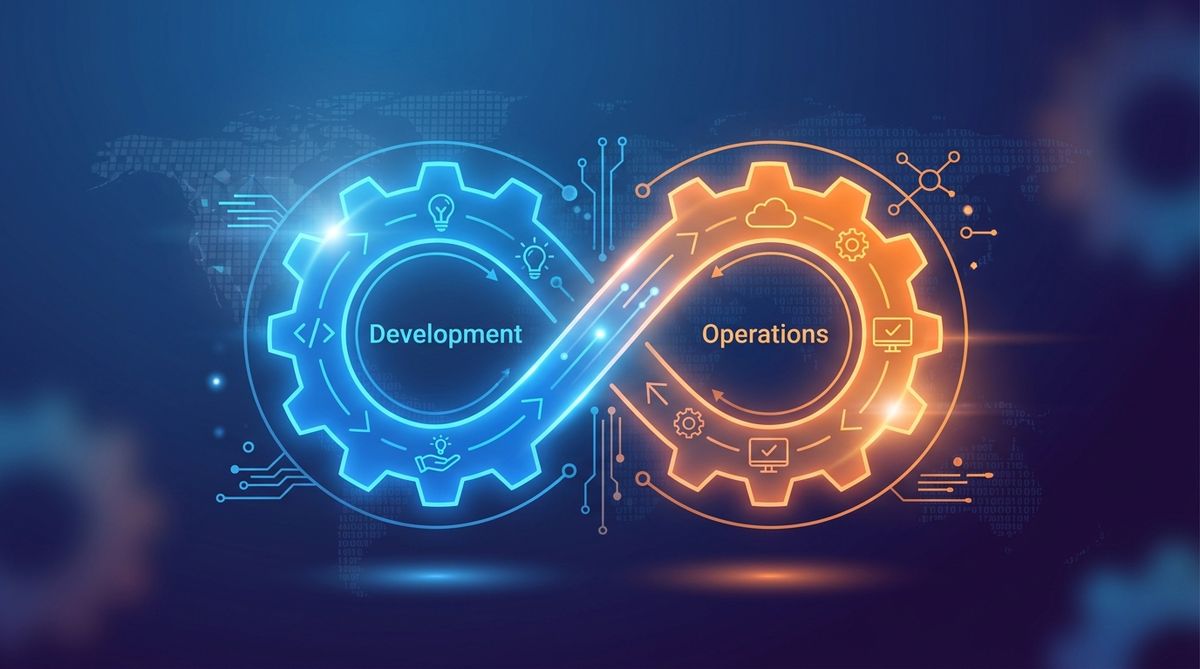
This is precisely why DevOps was born—to break down those silos and unify software development and operations into one fluid pipeline.
So, what exactly does DevOps mean in today's tech world, and why is it so critical?
- DevOps is a Culture, Not Just a Tool Contrary to popular belief, DevOps isn't just about using Docker, Kubernetes, or specific CI/CD tools. At its core, DevOps is a cultural mindset shift.
Shared Responsibility: Instead of a "not my job" mentality, the entire team takes end-to-end ownership—from the initial idea to seamless production execution.
Small & Frequent Releases: Rather than massive deployments every few months, systems are updated continuously in small increments to minimize risk.
- The Heart of the Process: CI/CD Pipelines One of the most tangible outcomes of DevOps is the CI/CD (Continuous Integration & Continuous Delivery/Deployment) pipeline.
Continuous Integration (CI): Developers regularly merge code changes into a central repository where automated tests validate every single commit.
Continuous Delivery / Deployment (CD): Validated code is automatically deployed to servers (Production) in a way that minimizes human error.
With this setup, the fear of "Never deploy on Fridays" vanishes; code can be released safely at any time.
- Minimizing Human Error Through Automation Manual, repetitive tasks are not only time-consuming but also prone to human error. The DevOps philosophy advocates for automating every routine process:
Automated testing
Infrastructure setup & configuration
Security scans
This allows engineers to focus on architectural solutions that add real value to the product instead of repetitive manual chores.
- Observability & Feedback Loops Shipping code to production isn't the end of the story—it's the beginning of a new phase. To ensure system health, live environments must be continuously monitored.
Detecting and resolving an issue before users even notice it is the real strength of modern DevOps architectures. Centralized logging, performance tracking, and real-time alert systems are essential pieces of this loop.
Summary & Next Steps DevOps is the art of accelerating software delivery without sacrificing stability or security. Organizations that adopt this mindset can reduce their time-to-market from months to hours.
In upcoming posts, we'll dive deeper under the hood to explore CI/CD setups, containerization, and zero-downtime deployment strategies with hands-on examples.